























Customers & staffCustom business portals
A logged-in home for your customers, suppliers or team: assets, documents, requests, invoices and history in one place, with roles that decide who sees what.
Web app development · portals, ERP, AI, configurators
Portals, ERP, AI, configurators and calculators that replace the spreadsheets and connect to the tools you already use. Scroll to watch one fill in, then try the demos.
Built around your process · we start with the people who do the work
Connected to your tools · Monday.com, Xero, Shopify, HubSpot, MYOB and your own systems
You own all of it · repository, infrastructure and docs in your name, plus a care plan after launch
Businesses we work with


Custom portals, operations systems, AI and machine learning in the steps that eat your team's day, configurators that price and order, and the calculators, dashboards and automations around them.
Customers & staffA logged-in home for your customers, suppliers or team: assets, documents, requests, invoices and history in one place, with roles that decide who sees what.
Run the businessQuoting, jobs, stock, scheduling and invoicing in one system, built around how you already work.
Assist, don't replaceModels wired into the steps that eat your team's day: reading enquiries, drafting quotes, classifying requests, summarising reports, answering customers from your own data.
Sell complex thingsProduct configurators that price in real time, order flows that land in your ERP, and integrations with the tools you already run: Monday.com, Xero, Shopify, HubSpot, MYOB.
See what's comingForecasts and anomaly detection on your own history: when an asset will need work, which accounts are going quiet, what next quarter looks like.
Help them decidePublic or private tools that turn a few inputs into a number people can act on: finance calculators, estimators, ROI tools, instant quotes with a PDF and a shareable link.
See what's happeningRevenue, orders, engagement and uptime on one screen, with the alerts and audit trail you need when something is off.
Remove the busyworkReminders that send themselves, records that sync both ways, approvals that move without a chase, reports that arrive on Monday morning.
Everything we build sits on one core: your data and your rules. Portals, staff apps, AI and ML modules and integrations plug into it, so adding one later never means rebuilding the rest. Tap a module to see what it connects to.
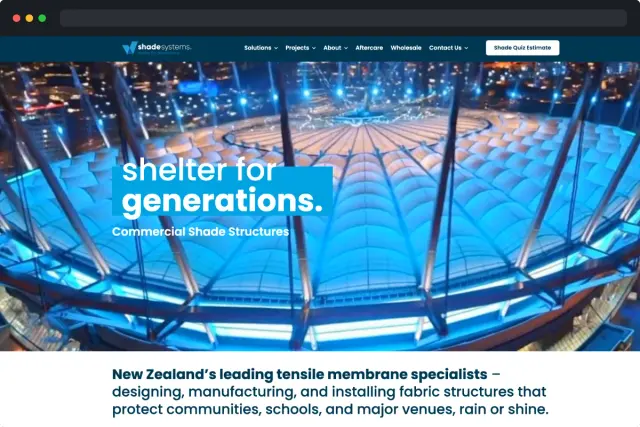
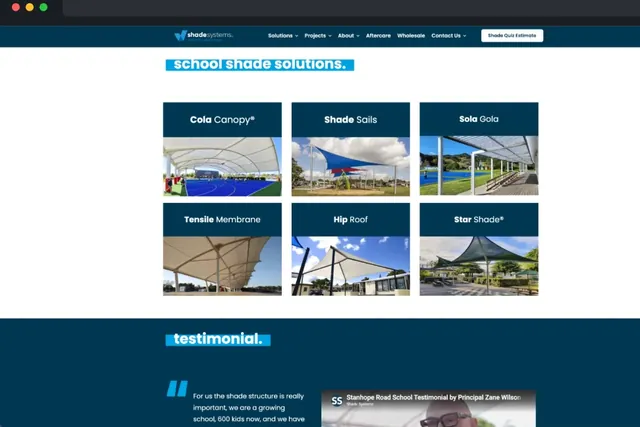
The aftercare portal we built for a New Zealand shade-structure manufacturer, recreated in code as Tui Canopies with a demo customer. Open an asset, read its condition history, switch on the forecast, raise a repair request, pay an invoice. It all works.
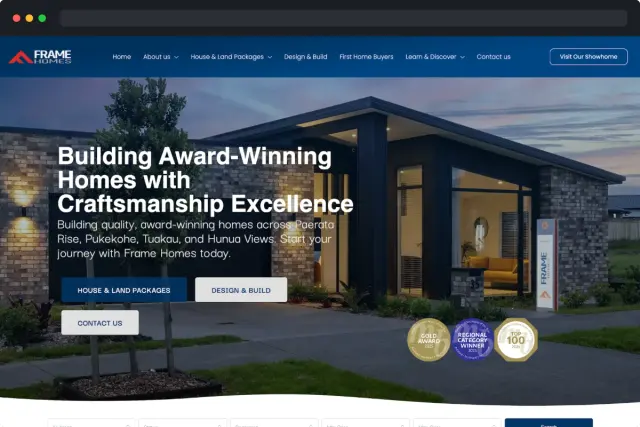
The trade platform behind a modular building company, in code as Tōtara Built. Flip the dashboard by period and currency, configure a classroom and watch the price move, place the order, then open the system-health monitor that keeps it honest.
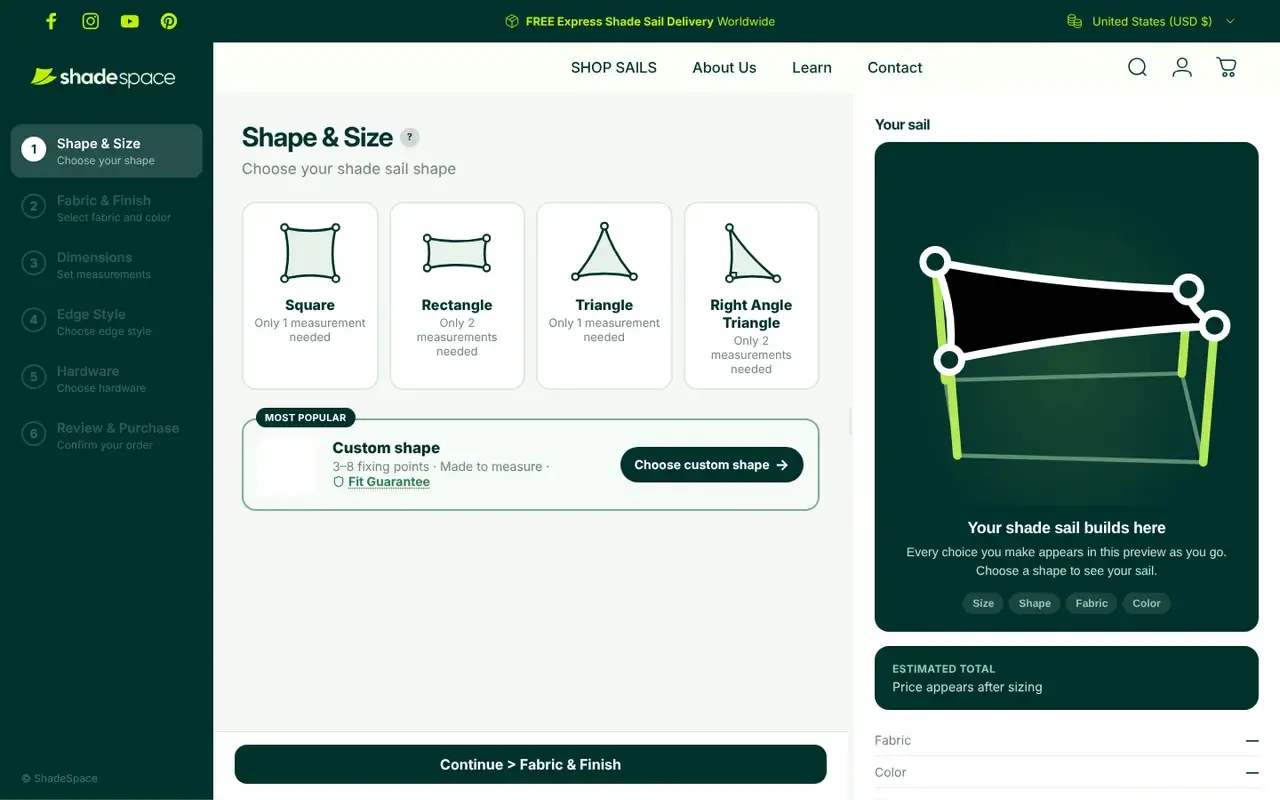
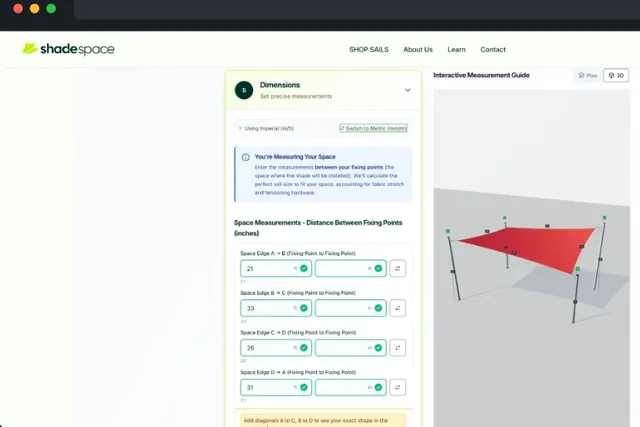
The shade-sail configurator we built for ShadeSpace, in code: pick a shape, a fabric and a colour, set the edges, and watch the plan draw itself and the price land, taxes and freight included. Five steps from an idea to a cart.
The demo above is our recreation. This is the live page on ShadeSpace’s store, captured on a desktop and on a phone: shape, size, fabric and colour chosen in the browser, priced as you go, and dropped straight into the Shopify cart.
Scroll inside the frame · switch to the phone view in the toolbar
Three calculators we built for a financial advice firm's website, in code as a made-up firm, Harbour & Hill: mortgage repayments, paying a loan off faster, and growing wealth over time. Every input is live, every result ends with a reason to talk to an adviser, and every calculation lands as a lead.
Reading referrals and turning them into appointments can eat a bookings desk's morning. Here a model reads the referral, pulls out the patient, scan, urgency and funding, matches the protocol and drafts the booking and the patient's prep letter. A radiographer approves. Pick a referral and press read.
Mindvault is a subscription study platform we built from the ground up. Every project has a type, so the AI knows what it can and won't do. Flashcards come back on spaced repetition. The quiz is written from your own notes and marked as you go. A control room tracks AI cost against revenue. Sit the quiz.
A tool for an architecture practice and its builders. It reads the drawings, finds walls, doors, windows and piles, counts them for the quantity surveyor's take-off, answers questions about the sheet and flags what a person should check against the district plan and the Building Code. The second tab shows what the AI costs, by task and model.
We start at the whiteboard with the people who do the work, write the architecture down before anything is coded, and give you a staging link from the first sprint.
Discovery · day oneWe sit with the people who do the work, map the process as it really runs, and find the three places software would give the most time back.
The data model, roles, integrations and any AI or ML worth having, written down and costed before anything is built.
Two-week sprints with a staging link from the first one. Your team uses it while it's being built, so the feedback arrives before the invoice.
Migration, training, monitoring and a care plan. Most clients keep adding modules for years, and nothing we build needs a rewrite to grow.
Every demo above recreates something in production. Client names are withheld where the system is internal. The shapes, the modules and the numbers are real.
NZ shade-structure manufacturer
A customer portal for the shade structures a national manufacturer has installed across New Zealand: assets with condition history, inspection reports, reminders, invoices and repair requests, plus a staff side with service plans and a Monday.com sync.
NZ modular building company
Trade accounts for schools, councils and builders, a catalogue of modular buildings with cladding and foundation options, instant estimates, applications and orders, with a dashboard that shows revenue, engagement and account health by period and currency.
NZ financial advice firm
Mortgage repayments, paying a loan off faster and growing wealth over time, each live on the firm's website with a shareable result and a reason to talk to an adviser. Every calculation lands as a lead in the pipeline.
Mindvault
A subscription study product: projects typed by purpose so the AI knows what it can and will not do, a library with cited answers, flashcards with spaced repetition, quizzes with a grade and the concepts to revisit, and a control room that watches AI cost against revenue per subscriber.
Harbour & Co.
Three systems and a rate-card binder replaced by one quoting engine with carrier rates, margin rules and a customer portal, so a quote goes out while the customer is still on the phone.
Most builds fall into one of three shapes. We write the scope down in discovery and fix the quote from the architecture. Every build ships in sprints you can use before the invoice arrives.
NZD, ex GST · 4 to 6 weeks
One job done well: a calculator, a configurator, a quoting tool or an AI assistant, embedded in your site or your systems.
NZD, ex GST · 8 to 12 weeks
A logged-in product for customers, suppliers or staff: accounts, roles, records, requests, documents and the integrations behind them.
NZD, ex GST · 3 to 5 months
ERP-grade: quoting, jobs, stock, scheduling, invoicing and reporting, with AI and machine learning where they earn their place.
Starting prices, set by Krush. Every system is quoted from its own architecture. A care plan after launch is priced separately.
A website tells people things. A web app does work: logins, data, dashboards, workflows, quotes, invoices. If your people or customers are doing things rather than reading things, it's an app, and it needs proper architecture rather than a template.
Yes, that's usually the point. We connect to Monday.com, Xero, MYOB, Shopify, HubSpot, Mailchimp and most things with an API. Where there's no API we've built importers, scheduled syncs and careful browser automations.
In the repetitive reading and drafting: turning an enquiry email into a structured quote, classifying support requests, summarising inspection reports, answering customer questions from your own documents. We wire it into the step where it saves time, with a person approving the result.
If you have history, you can forecast from it: which assets will need work, which accounts are going quiet, what next quarter looks like. We start with simple, explainable models and only go further when the data supports it.
Often, yes. We audit it first and tell you straight whether it's worth continuing or cheaper to rebuild. Both answers happen.
TypeScript end to end: Next.js on the front, Node and Postgres behind it, hosted on Vercel or AWS in Sydney with backups and monitoring. We chose it because it lasts and it's easy to hire developers for.
Yes, all of it. The repository, the infrastructure accounts and the documentation are in your name from the first sprint. A care plan keeps it patched, monitored and improving, but you can take it anywhere.
Tell us the process that lives in spreadsheets, the quote that takes a morning, or the customers who keep ringing for a status. We’ll come back with a system map and a fixed quote within two working days.
Get a quick quoteTell us what you need. We’ll come back with ideas, a timeframe and a fixed quote.