Transport and logistics

Logistics apps, transport software and web design for freight.

Freight runs on timing, and most of the delay is paperwork. We design and build driver apps, transport management software and websites for New Zealand carriers, couriers, warehouses and freight forwarders.

  • Works without mobile coverage
  • Connects to the systems you run
  • Auckland team
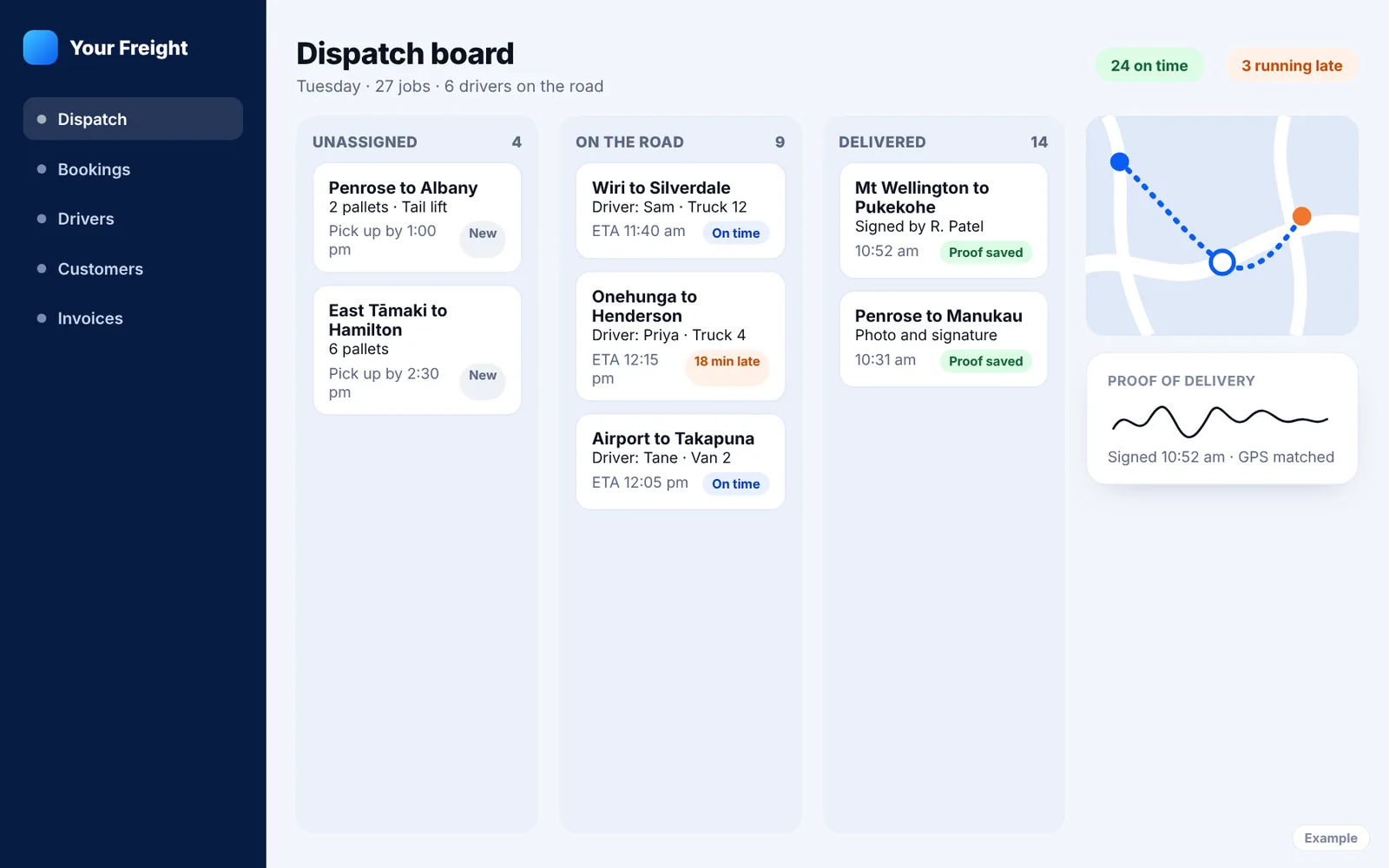
Example of a dispatch board showing unassigned, on the road and delivered jobs with proof of delivery

The problem

Where transport companies lose time

  • Paper dockets

    Proof of delivery comes back on paper days later, so invoices go out late and disputes drag on.

  • Where is my freight?

    Customers ring dispatch because they cannot check a status for themselves.

  • Dispatch from memory

    Jobs are handed out by phone and whiteboard, and one sick day throws the whole plan.

  • The same job, keyed three times

    A booking is typed into the job system, the accounts package and a spreadsheet, and the three drift apart.

What we build

What we build for transport and logistics

From a single driver app to the system that runs the yard. Each starts with a day in your operation.

Logistics apps

Apps for drivers, couriers and warehouse staff. Today's jobs, scanning, photos and a signature on the screen, all working with no signal and syncing when the phone is back in range.

  • Job lists and run sheets
  • Barcode and QR scanning
  • Photo and signature proof of delivery
  • Works offline and syncs later
More about mobile app design

Transport management software

A transport management system built around how you take bookings, plan runs and bill. Custom where your operation is unusual, or built around the TMS you already have where it is not.

  • Bookings, quotes and rate cards
  • Dispatch board and run planning
  • Live job status for your team
  • Invoices sent to Xero or MYOB
More about web app development

Supply chain software

Software that shows where stock and orders are across suppliers, warehouses and carriers: inventory, purchase orders, picking and the reports that tie them together.

  • Stock levels and warehouse locations
  • Purchase orders and inbound freight
  • Pick, pack and dispatch
  • Alerts and exception reports
More about web app development

Logistics web design

Websites for carriers, freight forwarders, couriers and warehouses. Clear about what you move and where, with quote requests, tracking and customer login built in.

  • Service and coverage pages
  • Quote request and booking forms
  • Track and trace lookup
  • Recruitment pages for drivers
More about website design

Customer portals and track and trace

A place where your customers book a job, see where it is and download the paperwork, without ringing dispatch. Statuses come from scans and GPS, so what the customer sees is what happened.

  • Online booking and re-ordering
  • Live status and estimated arrival
  • Proof of delivery and invoices to download
  • Email and text updates
More about web app development

Freight quoting and booking tools

A quote in seconds from your own rate cards, zones and surcharges, on your website or in the hands of your sales team. An accepted quote becomes a booking without anyone retyping it.

  • Rates by zone, weight and volume
  • Fuel and other surcharges applied
  • Quotes sent as a PDF and a link
  • Accepted quotes become jobs
More about web app development

Work we can show you

Work that shows the same building blocks

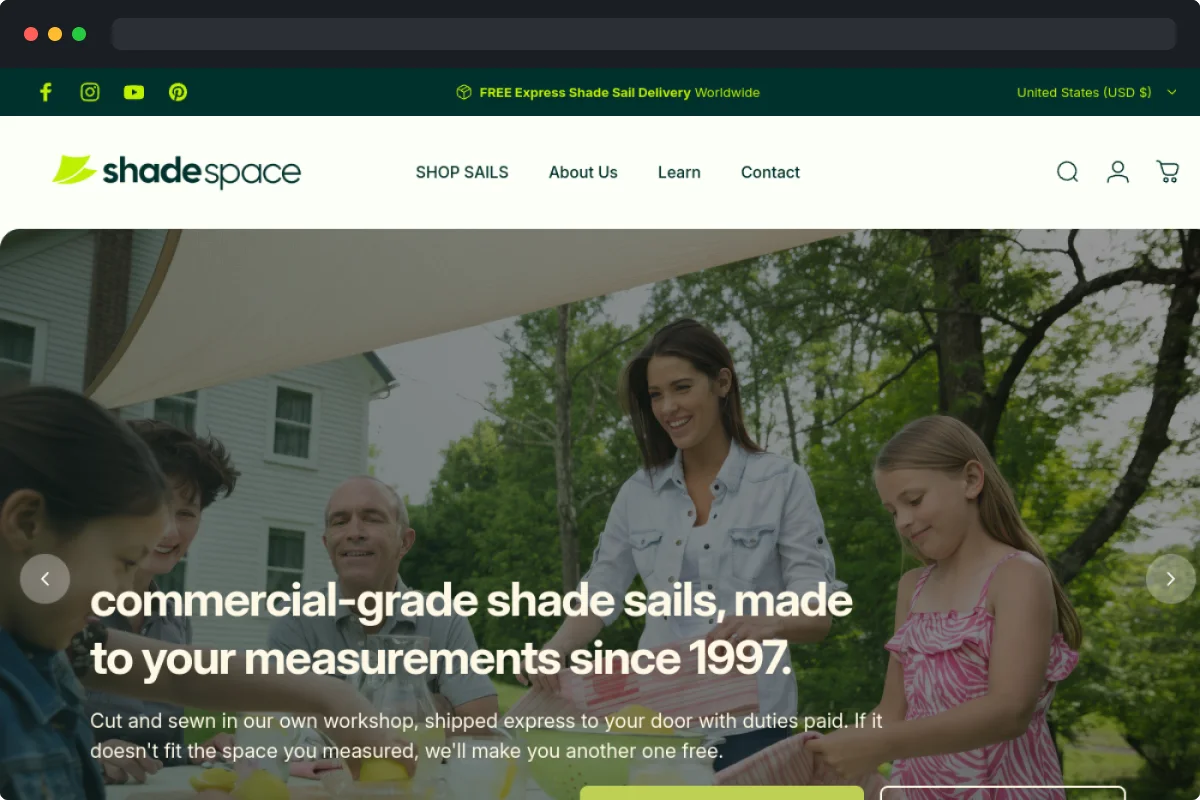
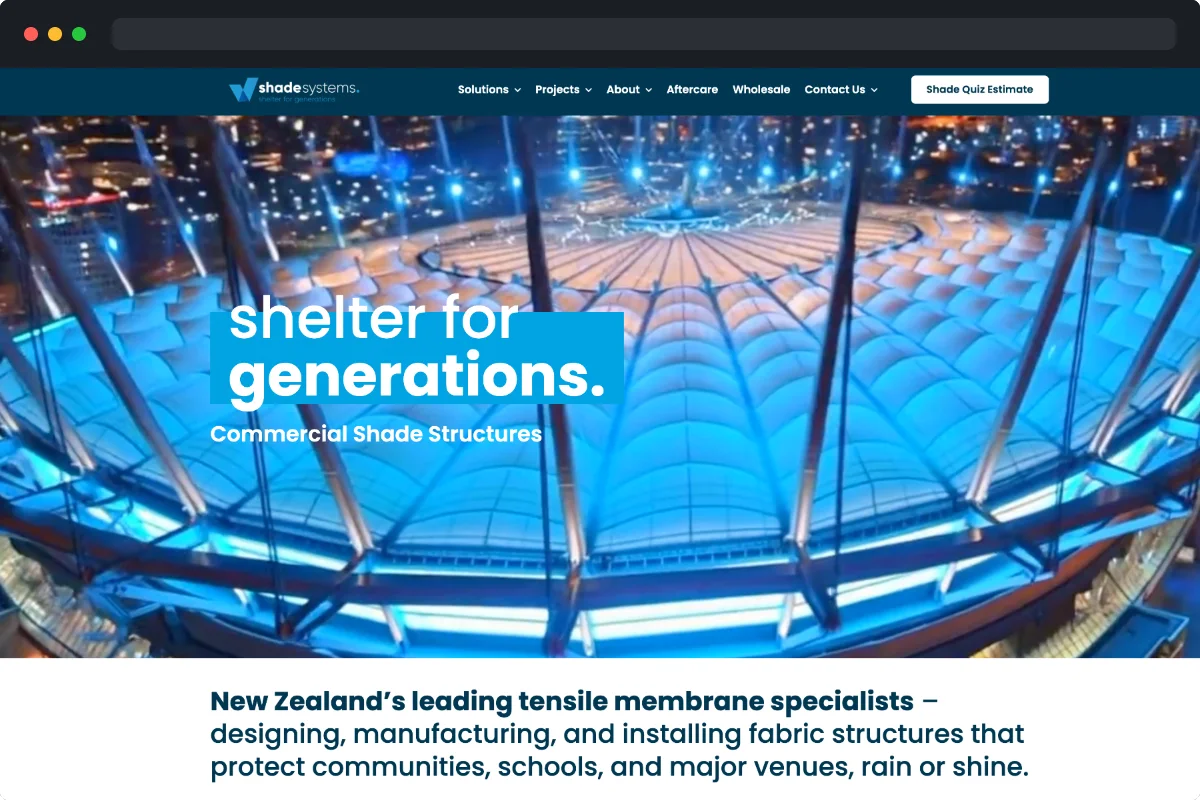
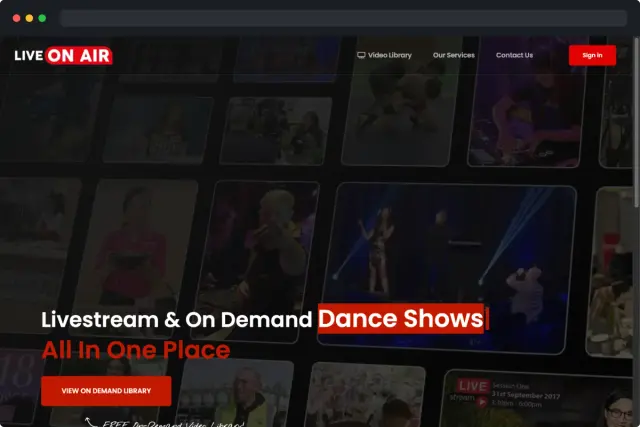
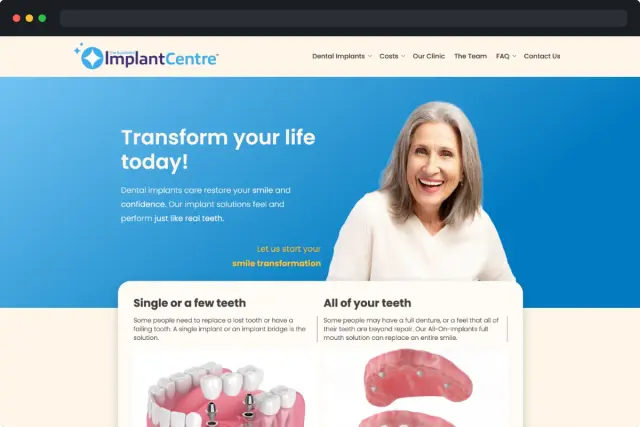
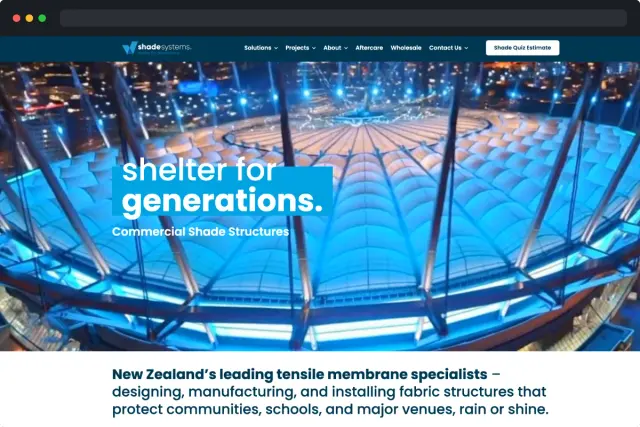
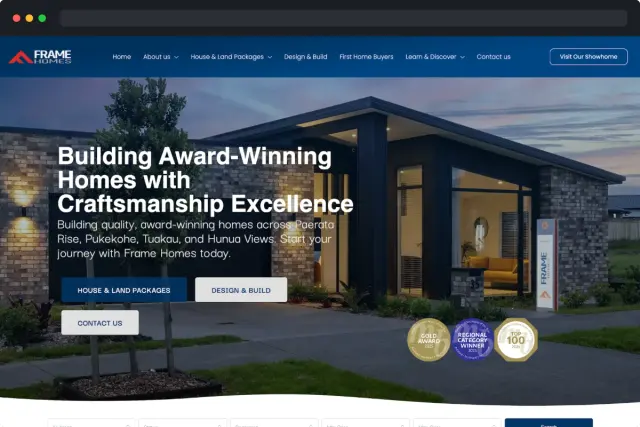
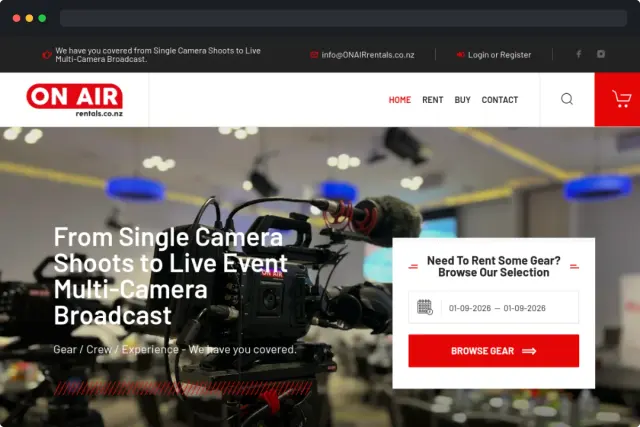
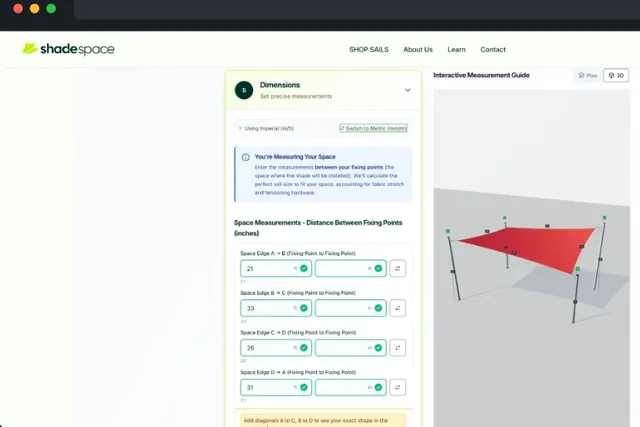
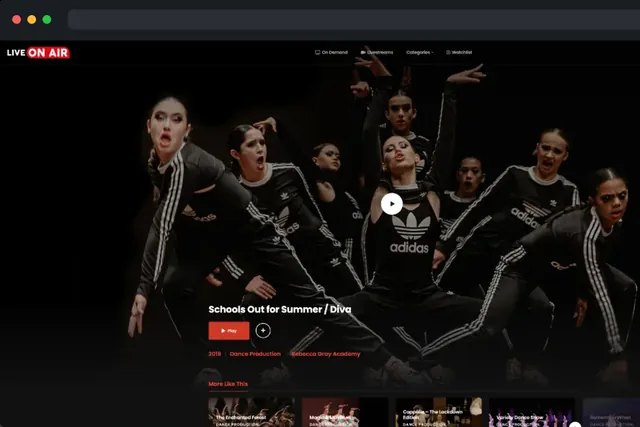
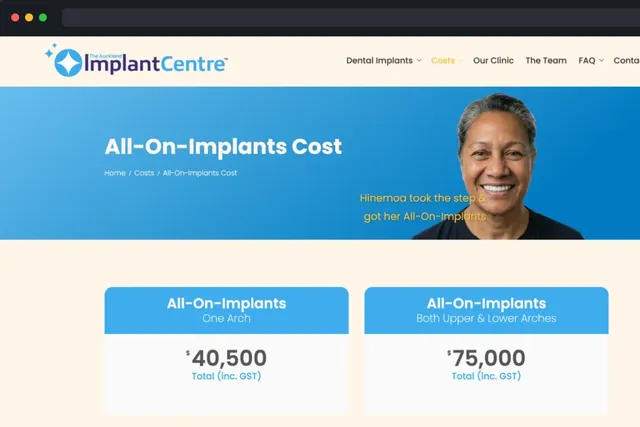
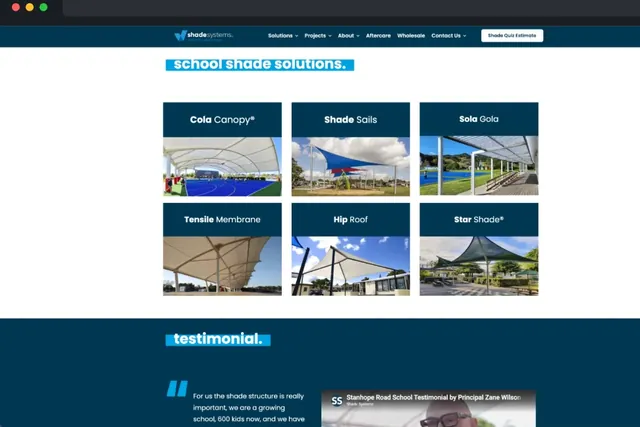
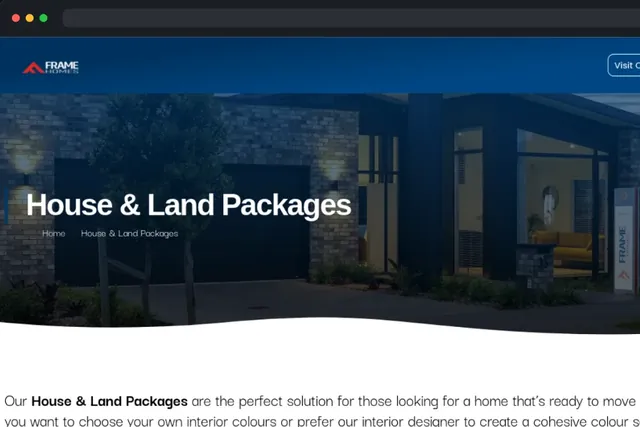
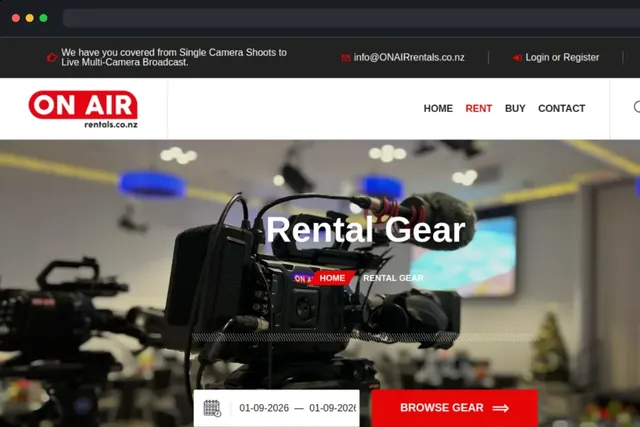
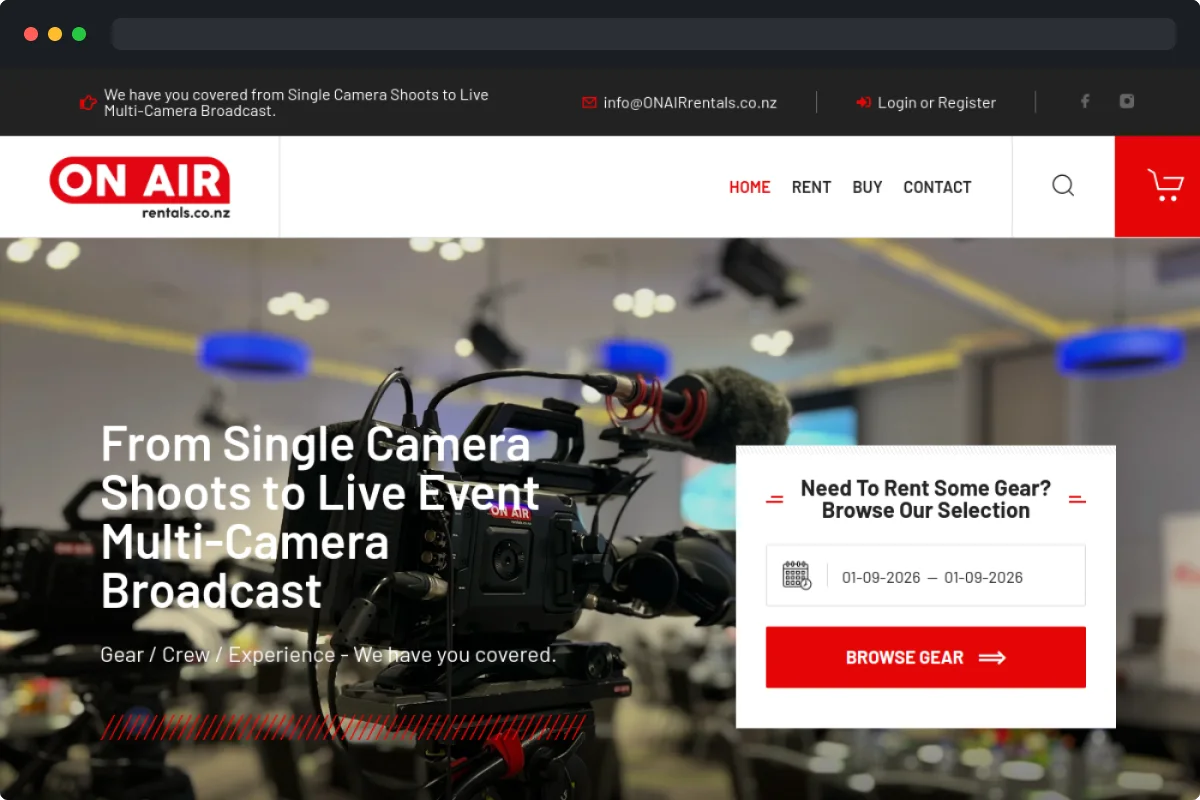
We have not published a transport project yet. These three rely on the same parts: live availability and bookings, orders shipped to more than 150 countries with duties and taxes worked out at checkout, and a large website for an industrial business with many kinds of customer.

Worth knowing first

Before you build logistics software

Buy, build or bolt on?

If your operation is standard general freight, an established transport management system will do the job for less than building one. We will tell you that.

Building pays off when the way you price, plan or prove delivery is different from everyone else. Bolting on is often the best value: a driver app, a customer portal or a quoting tool added to the system you already have, to close the one gap that costs you hours every day.

What drives the cost

Integration, mostly. Connecting to telematics, accounting, carriers and your customers' systems takes more time than building screens. The second driver is offline use: an app that keeps working in a dead spot and syncs cleanly afterwards takes more care than one that assumes coverage.

We quote each project and fix the price before we start.

Start with one run

The safest way in is one depot, one customer or one run. Drivers use the app for real for a few weeks, we fix what gets in their way, and then it goes out to everyone.

Software that drivers find slower than paper does not get used, whatever the office wants. So the people who will use it try it first.

How we work

What matters in transport, and how we handle it

  • Works with no signalJobs, scans, photos and signatures are saved on the phone and sent when coverage returns. Nothing is lost in a dead spot.
  • Built for the cab and the dockBig buttons, few taps and screens you can read in sunlight, because the app is used with gloves on at the back of a truck. Nothing asks for attention while the vehicle is moving.
  • Connects to your systemsTelematics such as EROAD or Teletrac Navman, accounting, carrier and warehouse systems are connected through their APIs where they offer one. We check before we quote.
  • Statuses customers can trustTracking comes from scans and GPS, not from someone remembering to update a job.
  • Safety recordsPre-start checks, incident reports and driver declarations are captured with a name, a time and a place, so the record is there when you need it.
  • Driver privacyLocation is personal information under the Privacy Act 2020. We track during work only, and drivers are told what is collected and why.

The plan

How a project runs

  1. Talk

    Tell us what you move, how jobs come in and where the day goes wrong.

  2. Plan

    We spend time with dispatch and a driver, map a job from booking to invoice, and list the systems to connect.

  3. Build and test

    One depot or one run uses it for real first. We fix what slows people down before it goes wider.

  4. Launch and look after

    We roll it out in stages, train your team, and keep it hosted and updated if you want us to.

Good to know

Questions people ask

Something else on your mind? Call (09) 951-9554 or send us a message.

Do you build apps for drivers and couriers?

Yes. We design and build apps for iPhone and Android with job lists, scanning, photos and signature capture, and the office system they report to.

Will the app work without mobile coverage?

Yes. Jobs are stored on the phone, and scans, photos and signatures are saved and sent when coverage returns. That matters on rural runs and inside steel sheds.

Can you connect to our TMS, telematics or accounting system?

Usually, if it offers an API or an export. We check what your systems support before we quote, and tell you plainly if something is not possible.

Should we buy a transport management system or build one?

Buy one if your operation is standard. Build when the way you price, plan or prove delivery is different. Or add a driver app, a portal or a quoting tool to the system you have, when one gap is costing you time.

Can customers track their own freight?

Yes. A tracking page or customer portal shows live status, estimated arrival and proof of delivery, so customers stop ringing dispatch to ask.

Can it capture proof of delivery?

Yes. A signature on the screen, photos, the time and the GPS position are saved against the job, and can be sent to the customer and attached to the invoice automatically.

Do you design websites for transport and freight companies?

Yes. We design and build websites for carriers, couriers, freight forwarders and warehouses, with quote requests, tracking and driver recruitment pages.

How much does logistics software cost?

It depends on the number of systems to connect and whether it has to work offline, so we quote each project and fix the price before we start.

How long does it take?

You get a timeframe in writing with your quote. A website is usually a matter of weeks. Apps and transport systems take longer, and we roll them out one depot or run at a time.
Planning a logistics app or system?

Tell us what you move and where the day goes wrong. We will come back with ideas and a fixed quote.

Ready to talk about
your project?

Tell us what you need. We’ll come back with ideas, a timeframe and a fixed quote.

Getting the search ready

↑↓ to move, Enter to openSearches every service, plan, article and answer on the site.

Quick QuoteA few quick taps

What can we help with?

Tap everything you are after. One is fine.

Websites and apps

Brand and content

More customers

AI

Keep it running