AI isn't coming for your job. It's coming for your busywork.

Updated 9 Sept 20265 min read
A robotic arm tidying a mountain of paperwork into a neat stack while a person walks toward a bright doorway

Sum up

Skip the sci-fi debate

Skip the sci-fi debate. The AI wins happening in real businesses right now are almost boringly practical: quotes drafted in seconds, inboxes triaged before morning coffee, invoices reconciled without a human touching a spreadsheet.

The companies seeing real returns from AI rarely make headlines. They're quietly removing 10 hours of drudge work per employee per week.

Finding your automation goldmine

The pattern we see across clients is consistent. Find the task that is (1) repetitive, (2) rule-ish but not quite rule-based, and (3) done weekly by someone expensive. That's your automation goldmine. Go for the mundane, not the moonshot.

Start with a simple audit: ask each team member to list the three tasks they dread most each week. Nine times out of ten, at least one of those is a perfect automation candidate.
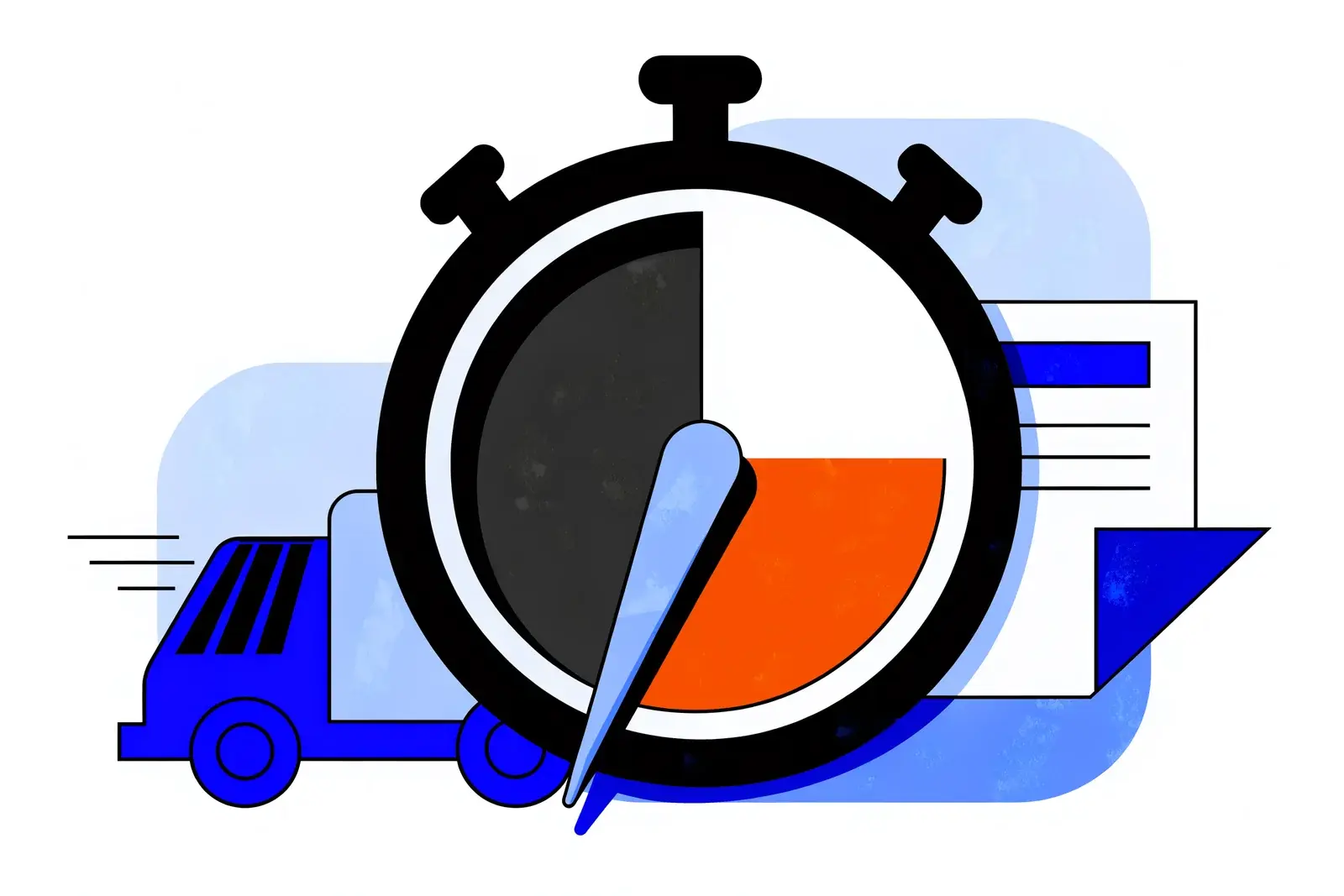
A stopwatch with a large grey segment shrinking to a small bright one, beside a delivery truck and a quote document
Freight quotes that took 40 minutes now draft in ninety seconds, with a human still approving every send.

A real-world example: freight quoting

One freight client came to us drowning in quote requests that took 40 minutes each to price manually. An AI-assisted workflow now drafts them in ninety seconds, with a human approving every send. Same team, triple the throughput, zero layoffs and a lot less drudgery.

What made it work was keeping humans in the loop. The AI handles the data gathering, calculation and draft formatting. The human reviews, adjusts and sends. That split keeps quality up and makes the work much faster.

Starting small and measuring what matters

Start small, keep humans in the loop and measure hours saved rather than headlines generated. The companies getting compounding value from AI are rarely the loudest. They automated their busywork a year ago and put the time back into the work that actually grows the business.

Track your before-and-after numbers closely: hours per task, error rates, team satisfaction scores. They tell the story, and they're usually better than anyone expected.


AI automationproductivitybusiness efficiencyworkflowartificial intelligence
Share:X / TwitterLinkedIn

Frequently asked questions

The best candidates are repetitive tasks that follow loose patterns but aren't purely rule-based: data entry, email triage, invoice processing, quote generation, report drafting and customer query routing. If a task is boring, frequent and time-consuming, AI can probably help.

In most cases, no. AI works best as a support tool, handling the repetitive parts of a job so your team can focus on creative, strategic and relationship-driven work. The goal is to make your existing team far more productive, not to replace them.

Costs vary widely depending on complexity, but many useful automations can be set up for under $5,000 using existing AI APIs and low-code tools. The ROI usually becomes positive within 1 to 3 months through time savings alone.

Start with the single, well-defined process that wastes the most time. Build a proof-of-concept with a human in the loop, measure the time saved over 2 to 4 weeks, then decide whether to expand. Don't try to automate everything at once.

Want help with this?

Tell us what you’re building. We’ll tell you how we’d get it noticed.

Ready to talk about
your project?

Tell us what you need. We’ll come back with ideas, a timeframe and a fixed quote.

Getting the search ready

↑↓ to move, Enter to openSearches every service, plan, article and answer on the site.

Quick QuoteA few quick taps

What can we help with?

Tap everything you are after. One is fine.

Websites and apps

Brand and content

More customers

AI

Keep it running